
EBLN Monitoring Data - Quality Check Failed
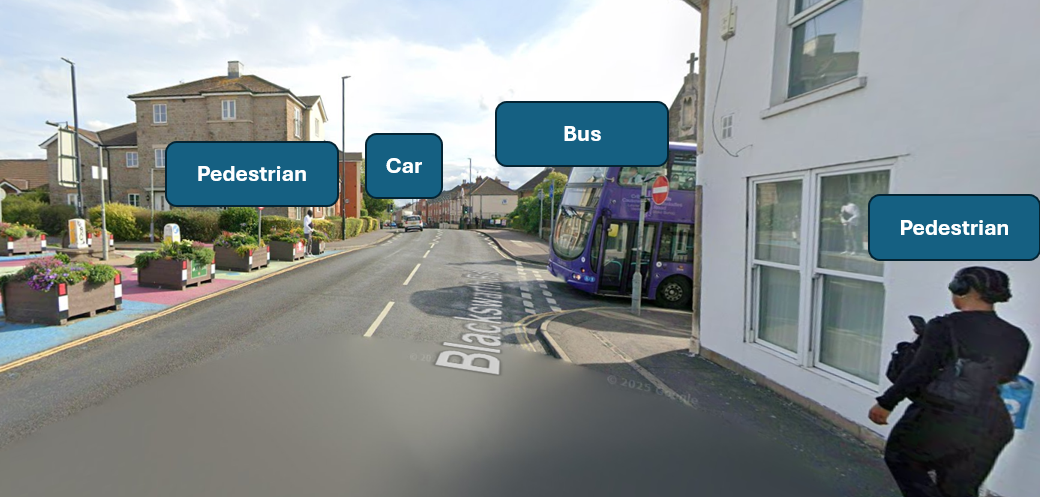
BCC recently published their East Bristol Liveable Neighbourhood – Monitoring Report.
The Council has been collecting live data on traffic levels within the scheme area and on immediate External Roads. Comparisons can be made between data collected in October 2024 (i.e., Pre Implementation of scheme trial) with October 2025 (i.e., Post Implementation of scheme trial).
This report includes this disclaimer:

The "third-party consultant" who undertook the data analysis is not identified in the report. As the data provided to the 3rd party has not been published, it is not really possible for anyone to check their data analysis.
Who are Systra?
As well as being paid to produce the EBLN Monitoring Report, Systra have also been appointed to produce a report on the Workplace Parking Levy Scheme by the Transport and Connectivity Committee on 23/10/2025.

Coincidentally, a few weeks before this was announced, Systra sponsored a conference at City Hall on 01/10/2025 where Tony Dyer and Ed Plowden were prominent speakers.
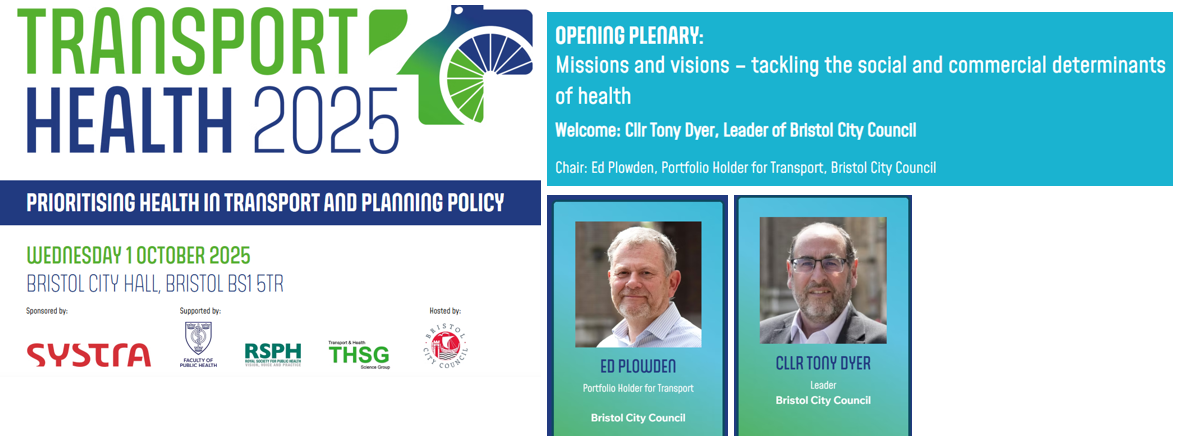
It's a shame that Systra didn't think to invite a community speaker impacted by the East Bristol Liveable Neighbourhood Scheme to talk about some of the health impacts of the scheme on local residents. But I don't think they actually wanted any speakers who weren't 150% supportive of these type of schemes.
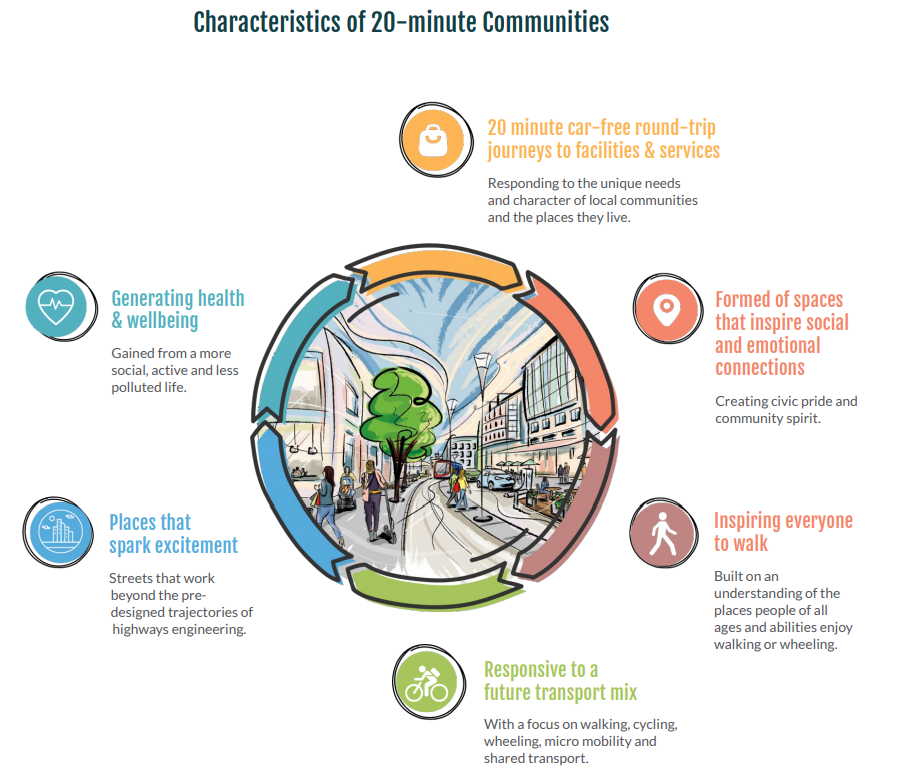
Systra also promote the "20 minute community" model, which does not make them sound like a very objective choice to produce this monitoring report.
Systra are a multi national company which was involved in tendering for the Jerusalem Light Rail project in 2018. This scheme was reported as being "a tool of Israel’s settlement policy and of its annexation of Jerusalem, in complete violation of international law".
After pressure from Trade Unions, Systra withdrew from this tendering process.
Systra worked on the Riyadh Metro project in Saudi Arabia. Amnesty International recently published a report about working conditions on this project. "Saudi Arabia: Migrant workers behind the Riyadh Metro system subjected to decade of devastating abuse"
Whilst Systra are not directly mentioned in the report, Amnesty International make this recommendation:

Whilst the UK section of the Systra website links to its "Modern Slavery Policy", they do not link to this policy on the Saudi Arabia section of their website.
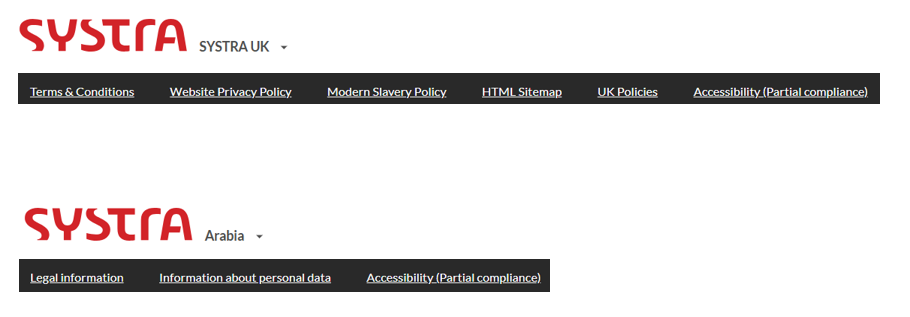
Perhaps Systra have concluded that they get more business in certain countries if they don't highlight their apparent commitment to human rights.
The Monitoring Report
When you inspect the document properties for the EBLN Monitoring Report, it shows that the document title is "St Peter's people-friendly streets pre-consultation monitoring report" and the author is "Islington Council".
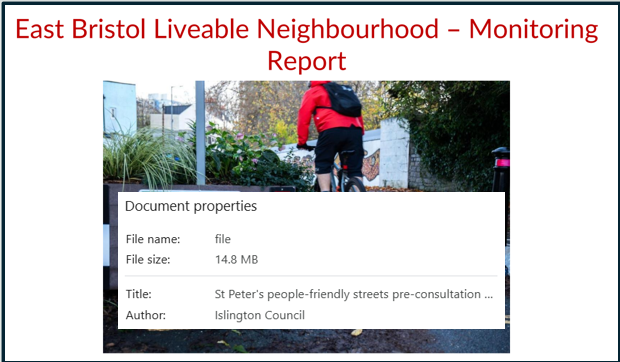
This implies that Systra started with a report they had written for someone else and changed the relevant details. Or perhaps they just use the same template document and never thought to change the title and author. When you search for this document title on Google, you see that Systra have done this for many other reports as well.
Monitoring Data Used
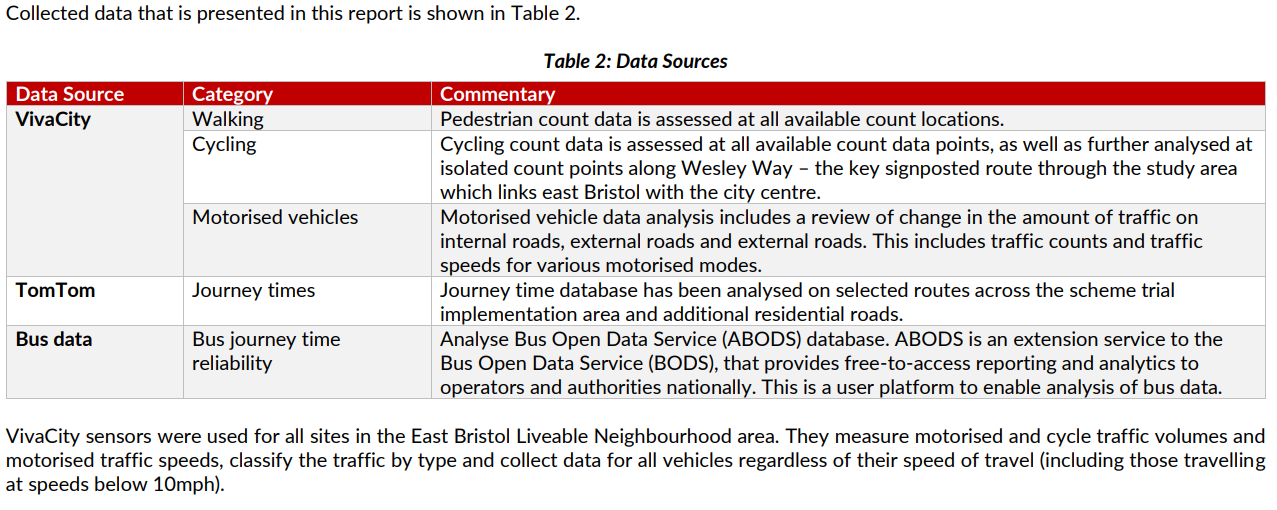
The comparative data set encompasses the first two weeks of October 2024 and the first two weeks of October 2025. The dates evaluated are 2-16 Oct 2024 and 1-15 Oct 2025 (Wednesday – Wednesday). Hourly data between 07:00-19:00 has been used as the basis for comparative assessment.
VivaCity
Sensors
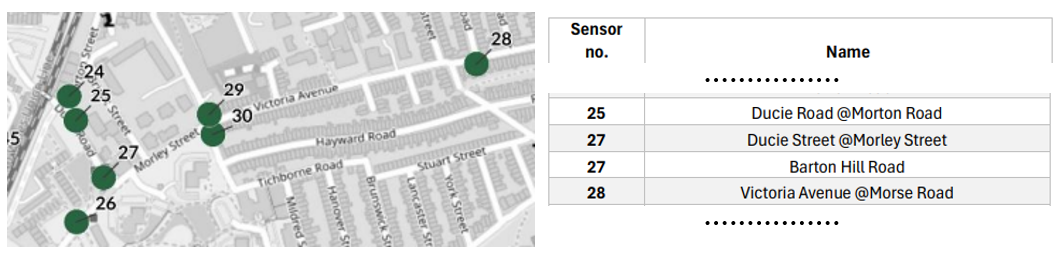
Page 12 of the Monitoring Report shows the locations of the Sensors used to collect the data used in the report.
The map shows "Sensor 26", but this sensor does not appear in the table. I assume that Systra made a mistake and mis-numbered one of the "Sensor 27" rows in the table, when it should have been "Sensor 26".
The counts are presented in 2 categories:
- Weekday - Tue,Wed and Thu - 7am to 7pm
- Weekend - Sat and Sun - 7am to 7pm
This means no data from Monday and Friday (midnight to 6am and 8pm to midnight is included. The missing data doesn't have any effect on the Before/After implementation difference as the same criteria is used.
The Pre- Implementation date range was from 2-16 October 2024, and the Post-Implementation date range was from 1-15 October 2025.
BCC only publish VivaCity Sensor data from January 2025, which means it is not possible for me to check the before/after analysis in the report.
I did check the "after" data for "Sensor 40" and I did get the same result of 45 Motorised Vehicles for the average Weekday measure.
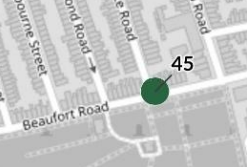
You can analyse the VivaCity data on my Bristol Traffic report.
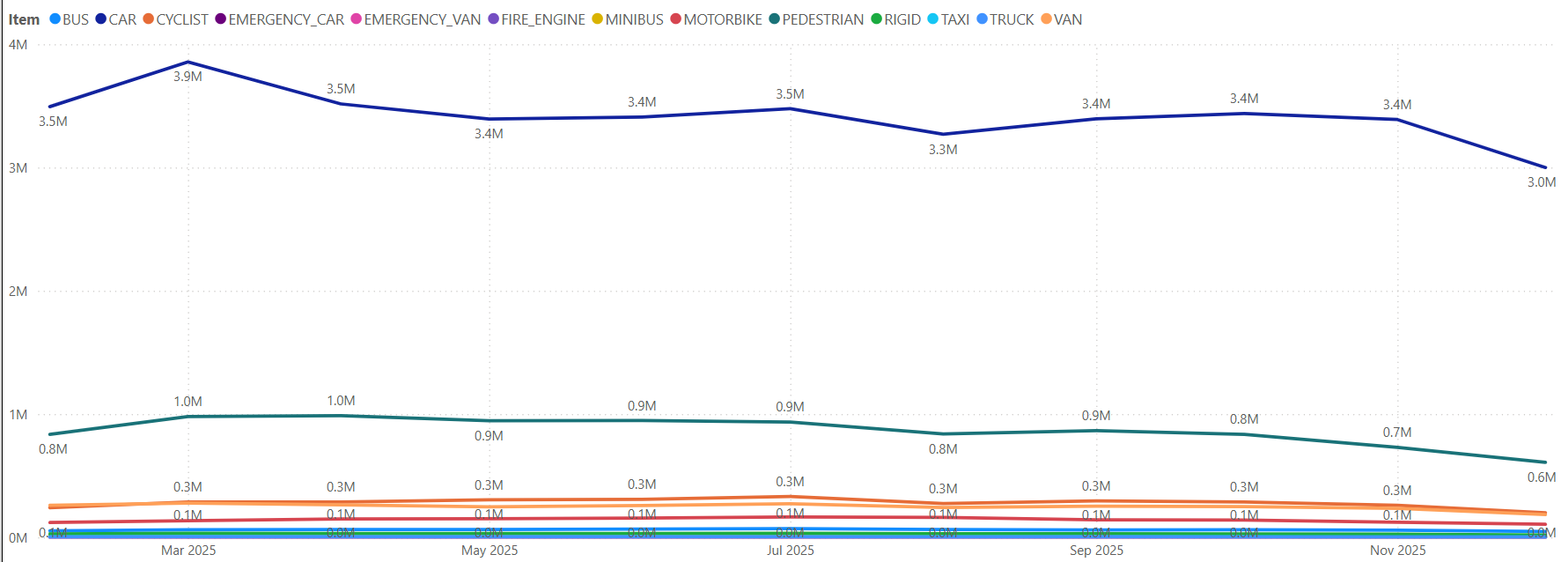
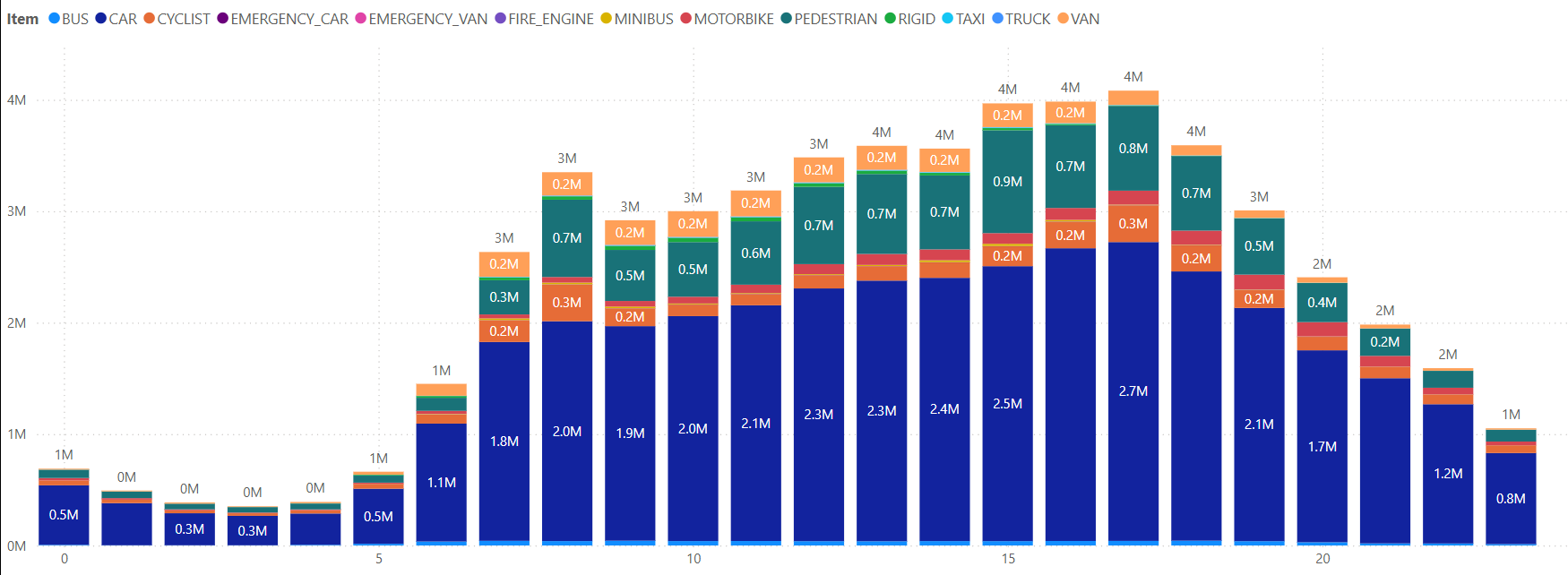
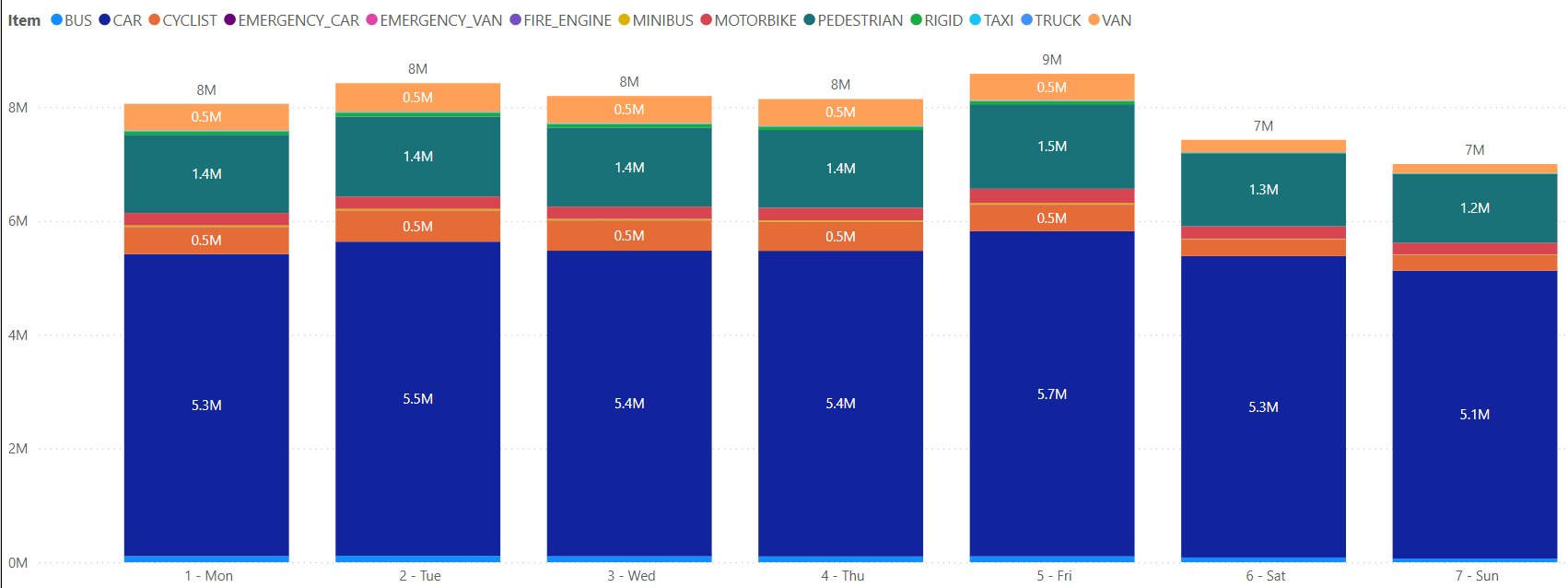
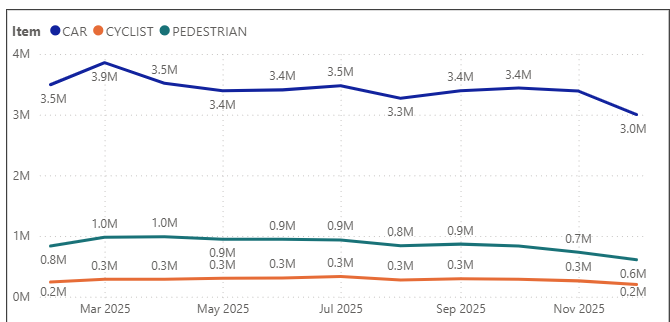
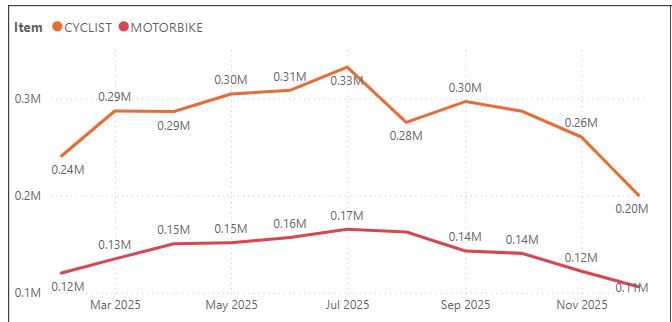
Here are some examples of reports for the ELBN area (01/02/2025 to 28/12/2025).
Monthly Counts
By Hour of Day
By Day of Week
Car, Cyclist and Pedestrian
Cyclist and Motorbike
TomTom
I do not have access to this data and have not carried out any further analysis.
Bus data
Bus Open Data is available for anyone to download and analyse. I have not analysed this data myself, but it is on my "todo" list.
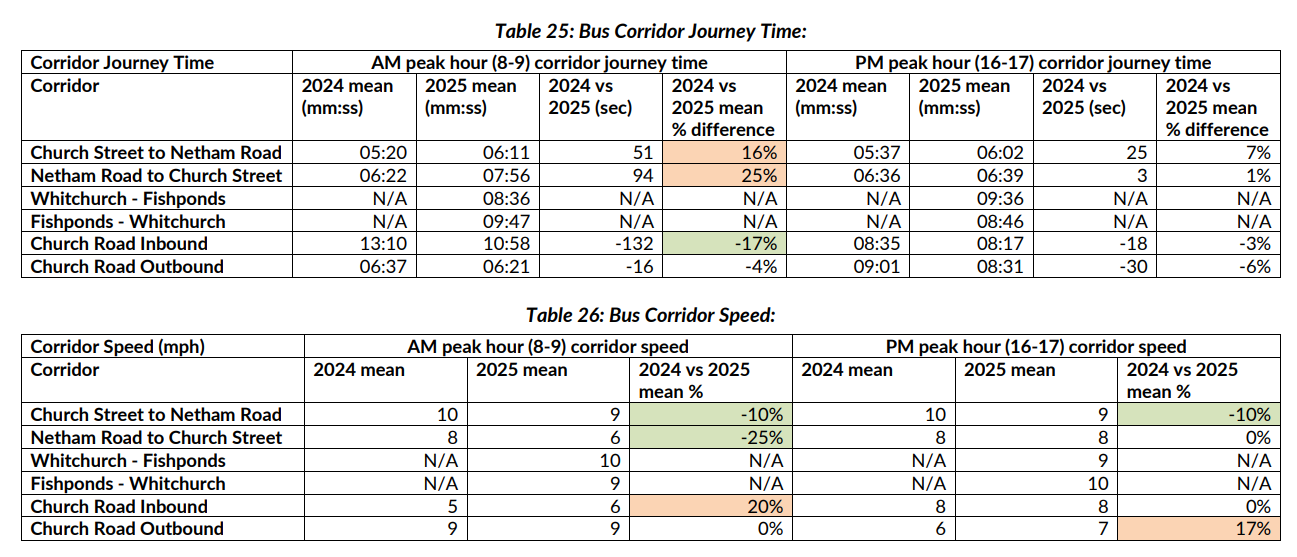
The report shows that some bus journeys were quicker and some were slower.
However, when you look at the key for the table (orange and green cells) something looks a bit odd.
Changes of greater than 10% in a direction aligning with scheme goals (reduced traffic/pollution levels/speeds, and increased cycling) are highlighted in green, whilst changes of greater than 10% in the opposite direction are highlighted in orange.
In the Journey Time table, routes where the journey time has increased by more than 10% are orange (bad), and green (good) where the journey time has reduced by more than 10%.
But in the Speed table, routes where the speed has reduced by more than 10% are green, and routes where the speeds have increased are orange. Surely it is better if the bus speeds are faster?
The report provides a list of additional metrics that includes a "Reduction in speeding". I can only assume that Systra assumed that a reduction in the speed of buses should be classified as a "Reduction in speeding".

Comments ()